
PL50 R omnicem
Powder tile adhesive

Rapid, flexible and water-resistant tile adhesive
Characteristic product properties
- Rapid setting, water-resistant powder tile adhesive for most types of tile.
- For ceramic tiles on both wall and floor applications.
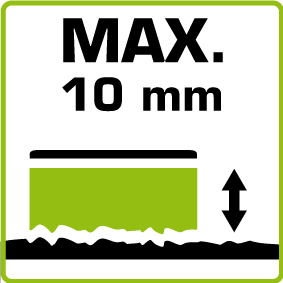
- Layer thickness: up to 10mm.
- Interior and exterior.
- Classified in accordance with EN 12004: C2F. S1.
Applications
For laying all ceramic floor and wall tiles, calibrated natural stone, composite cement tiles, and stone strips. Use white adhesive for types of natural stone that are sensitive to staining. Excellent levelling capacity, which is especially important when laying large format tiles and on surfaces that are not entirely level. The mortar can be used without any problems inside and outside. Can be used as an adhesive on surfaces that are not placed under any kind of strain, as well as most surfaces that are subjected to more wear and tear. Public spaces, shops (rapid approval required) and outdoor tiling are a few examples of where it can be used.



Getting started with PL50 R omnicem
Certificates and documents
Download the documents available from this specific product here.
Additional documents
Can't find the right certificate?
Contact us


Let us help you out
What different types of glue are there?
There are 3 types of glue, each with their own characteristic properties. They are all standardized within the European standard EN 12004.
The specific properties of a product say nothing about what you can do with it. Each manufacturer determines this individually in the technical data sheet. So always follow the regulations via our advice module.
- Cement-based powder tile adhesive (C)
- Dispersion glue (D)
- Reaction glue (R)
Read more about the different types of tile adhesive on the next page.
Which glue comb is best to use?
The choice of the right teeth depends on a number of factors;
Tip: By regularly removing a tile from the adhesive bed, you can see what the adhesive contact surface looks like and whether this is sufficient.
- the type of tile adhesive (paste or powder),
- the 'buttering-floating' method is used, and
- the application (wall or floor),
- the flatness of the substrate and the flatness of the tile.
For large format tiles >60x60 cm. It is in any case important that the surface is flat. If you need to eliminate large level differences in the surface, you can first level the surface, or you can use a thick-bed mortar with a round-toothed adhesive comb.
Read some guidelines regarding glue combs on the next page.