
Renovation mortars
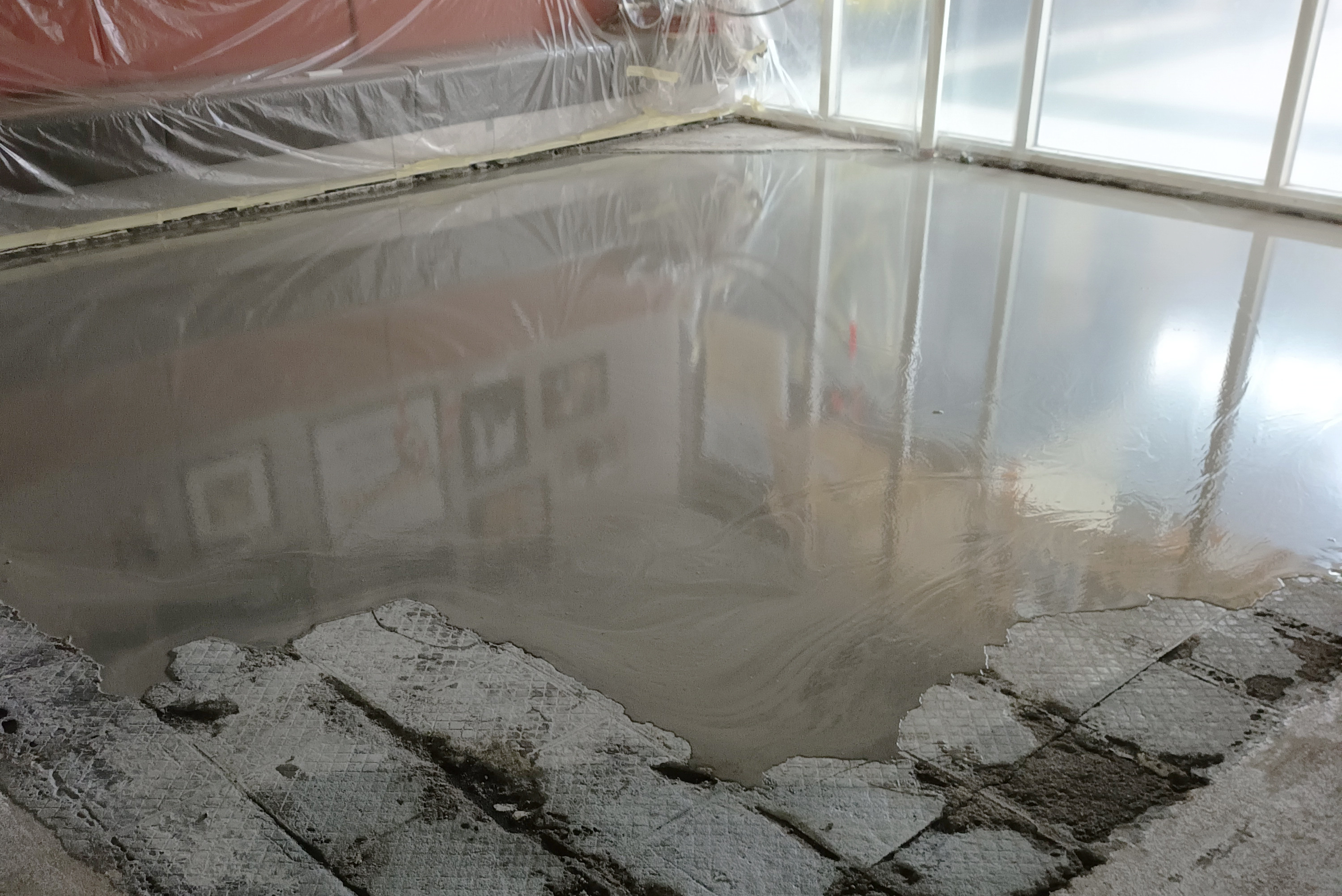
The power of renovation mortars: less demolition, smarter thinking
Why remove old floors when they can be refurbished? Renovation is significantly more sustainable because it prevents a lot of waste (costs) and allows construction to proceed faster. Our renovation mortars offer a solution that no one else has: walkable after two hours, load-bearing after four hours, and tileable after twelve hours. In addition, with our products, you can effortlessly apply different layer thicknesses in a single operation: from a few millimeters to substantial demolition damage of up to 50 mm. This eliminates many separate actions, speeding up the process even more. In short, the ideal renovation solution when the floor needs to be quickly available again for residents or commercial use.
Related products

Let us help you out
Is it always necessary to demolish the old, existing floor?
Too often, an “old” floor is completely demolished to ultimately create a new floor that is suitable for the final finish.
Together with Omnicol Flooring, it is often possible to avoid demolishing the old floor and thus save time and costs. We immediately pour a new flat layer over the old floor. This guarantees that your project will proceed quickly. And an ultra-flat floor, suitable for any final finish. This saves you time, demolition costs and inconvenience.
Why is it important to prepare the surface?
Preparing the surface is one of the most important parts of achieving a successful end result.
Depending on the surface you want to improve and the end goal you want to achieve:
- you can often finish it with a simple primer.
- OR you may have to further remove the surface, for example in the case of loose parts.
- OR you still have to pre-process by so-called dust-free “shot blasting”. This removes the top layer and any contamination from the surface and "roughens it", or increases the surface area for better adhesion. Excellent for all kinds of leveling compounds and screed floor mortars to adhere to.
The commonly used “milling of underfloor heating”, how do you finish it and why?
With milled underfloor heating it is necessary that there is good security between the existing floor and the underfloor heating pipe. Bonding/securing the pipe is a much underestimated part of the finishing process. The sand-cement floor has a somewhat hard top layer, but underneath there is a very porous layer that has a weak cohesion in practice. This may result in the following:
- The weak underlay cannot withstand the 'compressive forces' of a heating and cooling underfloor heating pipe and will come loose more than once. A repair mortar is often applied as a finishing layer. However, experience shows that this can never guarantee the adhesion necessary for sustainable and long-term use.
- This "lidding" (which lids, what is lidding?) creates hollow spaces that prevent efficient heat transfer.
- With softer floor coverings, the filling material can come loose and become compressed due to the load on tables, chairs, etc., for example. This can result in major repair costs. It is even “forbidden” to use a repair mortar for parquet.