
GM omnifix
Konstructionskleber

Hochleistungs-Dunnbettmörtel für dünne Fugen
Kennzeichnende Produktmerkmale
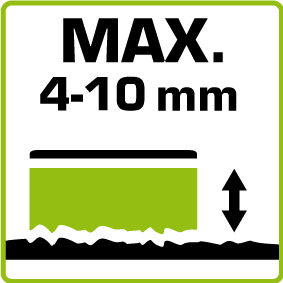
- Mörtel und Fuge in einem, 4 bis 10 mm.
- Geeignet zum Vermauern aller Arten von Ziegeln und Betonsteinen.
- 2 Typen: A (stark saugender Stein) en B (mäßig saugender/wasserundurchlässiger Stein).
- Innen- und Außenbereich.
Einsatzbereiche
GM+ omnifix ist ein hochleistungsfähiger Dünnbett-Klebemörtel, geeignet zum Vermauern und Verkleben aller Arten von Ziegeln und Betonsteinen für Fugenbreiten von 4 bis 10 mm. Mit Kelle, Spritzbeutel oder Klebemaschine zu verarbeiten. Da die (dünnere) Verfugung zurückliegend und in einer passenden Farbe ausgeführt wird, bleibt die Mörtelschicht unauffällig. Der Mörtel kann in allen Standardsituationen verwendet werden, und zwar sowohl mit vollen als auch mit offenen Stoßfugen und als Verfugungsmörtel. Es gibt zwei Mörteltypen, je nach Saugkraft des Steins und je nach Verarbeitungsmethode: Typ A für saugende Steine und Typ B für schwach saugende oder wasserundurchlässige Steine und Betonsteine.
Externe Zertifizierung
- CE Konformität gemäß System 2+, BÜV NW, Düsseldorfer Straße 50, D-47051, Duisburg mit Nummer 0778, Zertifikat 0778-CPR-8.554-2/1 998-2
| URSPRÜNGLICHE WASSERAUFNAHME (IW) | KLEBSTOFFTYP | ||
| IW klasse | Kategorie | Angabe (kg/m2 min) | GM+ |
| IW1 | Sehr schwach saugend | IW ≤ 0,5 | B |
| IW2 | Mäßig saugend | 0,5 < IW ≤ 1,5 | A |
| IW3 | Normal saugend | 1,5 < IW ≤ 4,0 | A |
| IW4 | Stark saugend | 4,0 < IW | A |
IW: gemäß EN 772-11 bestimmt
Witterungsumstände können die Saugkraft des Steins beeinflussen.
Erste Schritte mit GM omnifix

chocolate

kaki

pure

campine

sienna

straw

snow

toscane

concrete

titan

sand

ivoire

sahara

pigeon

rosso

metallic

orange

canyon

antracite

cacao

wengé

wine
Farbkarte
Bescheinigungen und Dokumente
Laden Sie die für dieses Produkt verfügbaren Dokumente hier herunter.
Zusätzliche Dokumente
Sie finden das richtige Zertifikat nicht?
Kontaktieren Sie uns


Lassen Sie uns ihnen helfen
Was ist der Unterschied zwischen den Techniken?
Kleben/Dünnmauern, Bügeln und normales Mauern von Vormauerziegeln.
- Verklebung oder Dünnmauerwerk: Zwischen den Vormauerziegeln entsteht eine Fuge von 4 bis 8 mm. Der Leim oder Dünnbettmörtel (auch Dünnbettmörtel genannt) wird vertieft (tiefer) aufgetragen und der Stein wird nicht mehr hinzugefügt. Da eine dünnere Fuge entsteht, die nicht aufgetragen wird, bestimmt die Farbe des Steins maßgeblich das Erscheinungsbild der Fassade. Der Klebemörtel bzw. Dünnbettmörtel wird häufig in einer zur Steinfarbe passenden Farbe verarbeitet.
- Traditionelles Mauerwerk: Die Fuge beträgt ca. 12 mm. Beim Verlegen von Ziegeln bestimmt die Fuge das Erscheinungsbild. Je dünner die Fuge, desto stärker ist der Effekt.
- Unterputzen: Bei dieser Technik handelt es sich um ein herkömmliches Mauerwerk (8–12 mm Fuge), wobei der farbige Mauermörtel in einem weiteren Arbeitsgang auch zum Fertigstellen der Fuge verwendet wird. Es steigert vor allem die Rendite.
Die Wahl zwischen Kleben und Dünnmauern einerseits und Mauern oder Bügeln andererseits ist in erster Linie eine ästhetische Entscheidung.
Dünnmauern oder Kleben?
Das Kleben ist von wesentlich besserer Qualität als das dünne Mauern. Üblicherweise wird dünnwandiger Ziegelmörtel verwendet wird gewählt, wenn Sie den Mörtel mit einer Kelle (d. h. auf herkömmliche Weise) auftragen möchten. Dadurch wird die Fuge dicker als bei Klebemörtel (oft 6-8 mm). Auch beim Verlegen dünner Ziegel mit der Kelle ist die Ergiebigkeit geringer als beim Verkleben mit einem Spritzbeutel oder einer Pumpe. Da der Mörtelverbrauch höher ist, muss der überschüssige Mörtel abgekratzt und die Fassade gebürstet werden. Die Erfahrung aus der Praxis hat gezeigt, dass das Kleben schneller geht und zudem immer bessere Ergebnisse liefert. Zudem ist mit Leim technisch noch viel mehr möglich, denn der Klebemörtel ist viel fester.
Muss ich meinen Farbmörtel auf einmal bestellen?
Um leichte Farbunterschiede zu vermeiden, empfiehlt es sich, farbigen Mörtel am Stück zu bestellen.